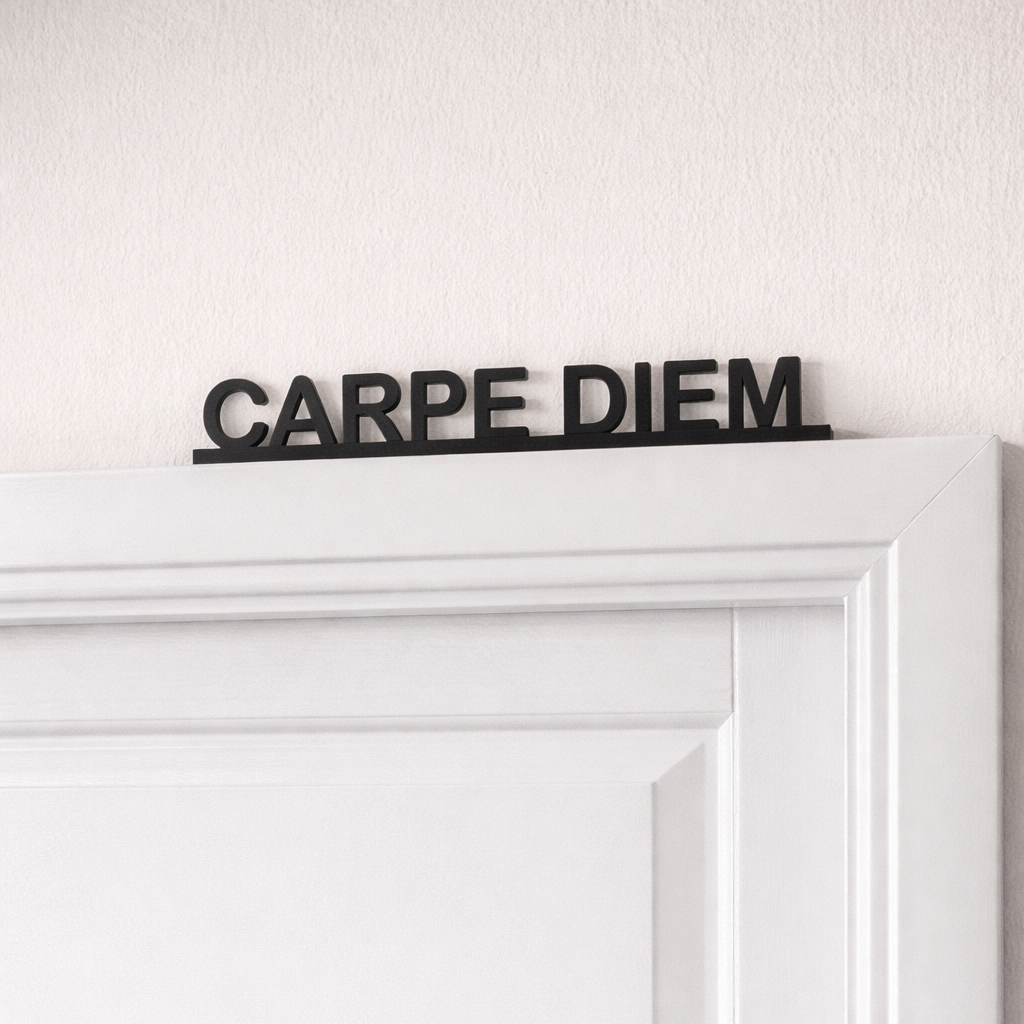
Carpe Diem is one of the most recognised phrases in the Western world — and one of the most misunderstood. It translates literally as "seize the day", from the Latin carpere (to pluck, to harvest) and diem (day). The full line from Horace reads: carpe diem, quam minimum credula postero — seize the day, trusting as little as possible in tomorrow.
It is not a call to recklessness. It is a philosopher's warning about the nature of time — that the present moment is the only one we truly possess, and that postponing life is the surest way to miss it entirely.
"Seize the day, put very little trust in tomorrow."
— Horace, Odes I.11, 23 BC
Horace and the Origin of Carpe Diem
The phrase comes from Quintus Horatius Flaccus — known simply as Horace — one of the greatest lyric poets of ancient Rome. Writing in 23 BC during the reign of Augustus, Horace composed the Odes, a collection of poems that would shape
Western literature for two millennia. Ode I.11, addressed to a woman named Leuconoë, urges her to stop consulting astrologers about the future and instead live fully in the present.
Horace himself lived through the chaos of the Roman civil wars, witnessing the fall of the Republic and the rise of the Empire. His philosophy was forged in genuine uncertainty — the kind that makes you understand, viscerally, that tomorrow
is not guaranteed.
"While we talk, envious time will have already fled. Seize the day, trust as little as possible in tomorrow."
— Horace, Odes I.11 (full passage)
Carpe Diem and Stoic Philosophy
Though Horace was not strictly a Stoic, Carpe Diem shares deep roots with Stoic thought. Marcus Aurelius wrote in the Meditations that each day should be lived as if it could be your last — not from anxiety, but from a clear-eyed
appreciation of what is actually in front of you. Seneca, the great Stoic philosopher, warned obsessively against the procrastinatio vitae — the postponement of life.
Both traditions converge on the same truth: most people do not lose their lives all at once. They lose them hour by hour, distracted, deferred, waiting for some better moment that never comes.
Carpe Diem Above Your Door
There is a reason this phrase has survived 2,000 years. It works. It cuts through. Every time you cross your threshold — heading to work, leaving for an appointment, stepping out into a morning you didn't have to earn — these two words
are there.
Placing Carpe Diem above your door turns a daily habit into a daily philosophy. Not the hollow version from motivational posters, but the original — a poet's reminder, written in the shadow of civil war, that the only
day you are certain of is this one.
Your guests will see it. They will ask about it. And you will have two thousand years of literature behind your answer.
About This Door Topper
The Carpe Diem door topper is 3D printed in high-quality PLA, designed to sit cleanly above any standard door frame. Lightweight, durable, and built to last. Created in Switzerland, each piece is inspected before shipping.