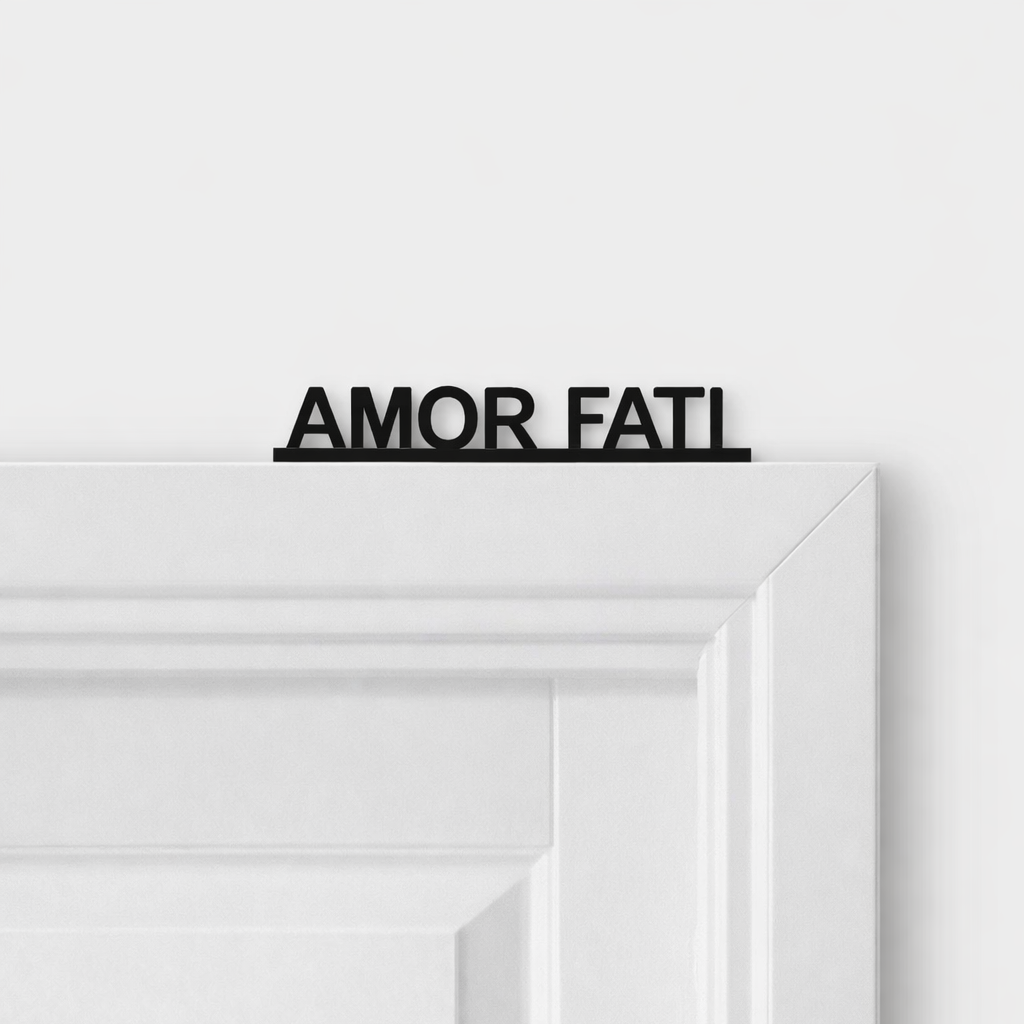
Amor Fati is a Latin phrase that translates literally as "love of fate" — the embrace of everything that happens in one's life, including suffering, loss, and uncertainty. It is one of the most powerful concepts in Stoic
philosophy, and one of the most practical.
The idea is not merely to tolerate what life brings, nor to passively accept it. Amor Fati is an active, almost defiant love of one's circumstances — a choice to see everything that happens, including the worst of it, as necessary, even
desirable.
"My formula for greatness in a human being is amor fati: that one wants nothing to be different, not forward, not backward, not in all eternity."
— Friedrich Nietzsche, Ecce Homo (1888)
The Stoic Roots of Amor Fati
Although the Latin phrase itself was popularised by Nietzsche in the 19th century, the concept is deeply rooted in ancient Stoic thought. Marcus Aurelius, Emperor of Rome and perhaps the most famous Stoic of all, wrote extensively about
the acceptance of fate in his private journals — later published as the Meditations.
For the Stoics, the universe operates according to a rational order — the logos. Everything that happens, happens for a reason, as part of a greater whole. To resist this is to suffer needlessly. To embrace it — to love it — is
to achieve a kind of inner freedom that no external circumstance can take away.
Epictetus, who was born a slave, taught that while we cannot control what happens to us, we always control our response. Amor Fati is the fullest expression of this teaching: not just neutrality toward fate, but genuine love for it.
"Do not seek for things to happen the way you want them to; but wish that what happens happens as it is, and you will have a tranquil flow of life."
— Epictetus, Enchiridion
Amor Fati in Daily Life
The power of Amor Fati lies in its daily practice. It is not a philosophy for grand moments of tragedy — it is a philosophy for every morning you leave your house, every setback you face at work, every plan that falls apart.
This is why placing Amor Fati above your door is more than a decorative choice. Every time you cross your threshold — leaving for work, coming home after a difficult day, welcoming guests — the phrase is there. Two words.
One quiet reminder that whatever this day brings, you have already chosen how to meet it.
Many people who live by Stoic philosophy keep a memento of Amor Fati close: a coin, a tattoo, a journal entry. A door topper takes that private practice and makes it architectural — a permanent, physical declaration of how you choose to
live.
Why Latin?
Latin is not a dead language — it is a precise one. The Romans understood that the right word, carved in the right place, outlasts everything else. Their inscriptions survive on doorways, arches, and monuments across Europe two thousand
years later. There is something about Latin above a door that signals seriousness, depth, and intention in a way no modern language quite matches.
Your guests will notice it. They will ask about it. And you will have a story worth telling.
About This Door Topper
The Amor Fati door topper is 3D printed in high-quality PLA, hand-finished and designed to sit cleanly above any standard door frame. It is lightweight, durable, and designed to last. Created in Switzerland, each piece is inspected before
shipping.